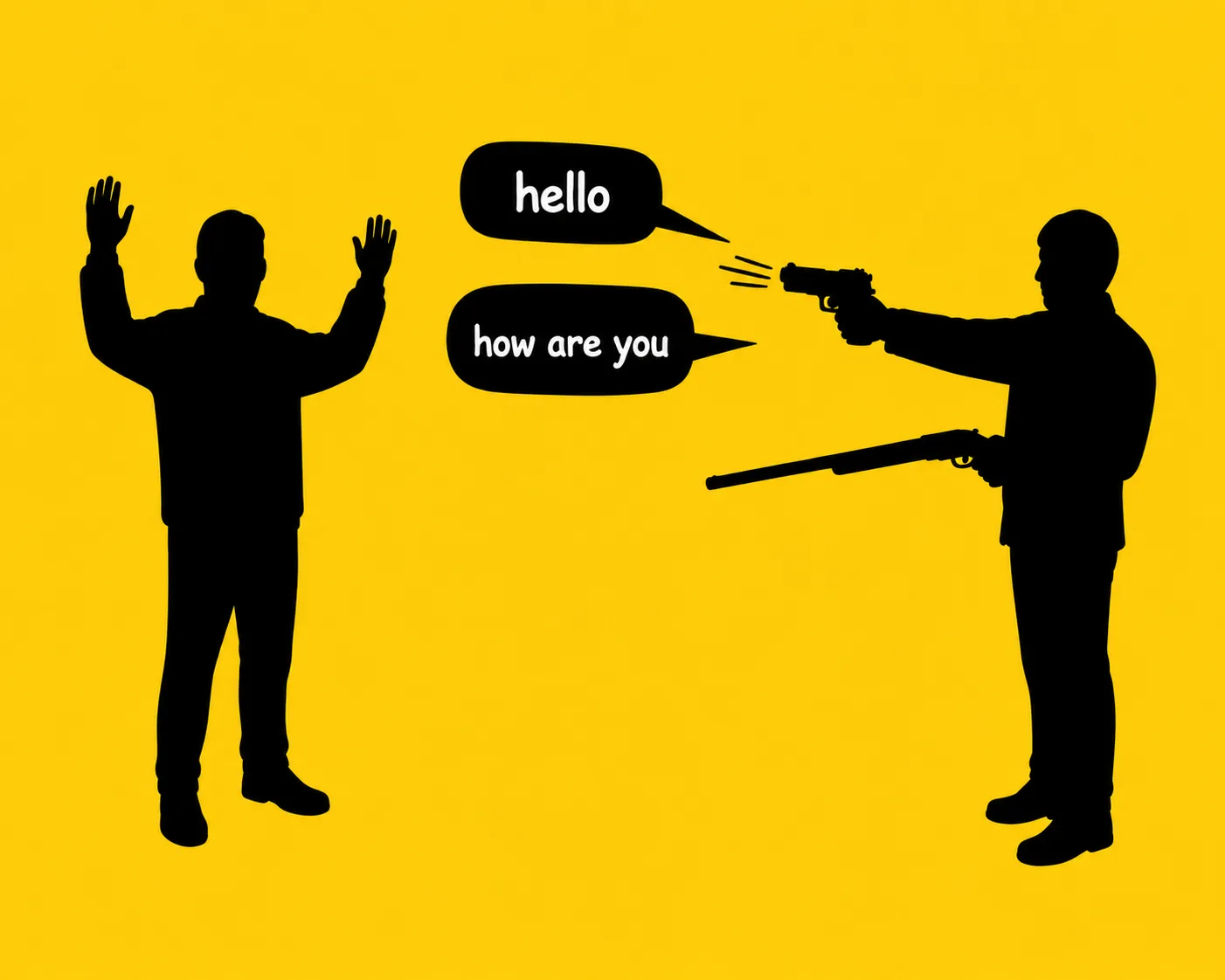
The pause that runs a beat too long. The half-laugh while you work out whether the thing you’re about to say is fine to say. The reply that lands three seconds after the moment’s already gone. Then the walk home, where you go back over it line by line and assemble all the better versions you could have used.
That whole loop has a name, though most people who live in it never call it anything. It’s the freeze. And it’s not some flaw in your personality. It’s a pattern your brain has settled into, and patterns can shift.
What the freeze actually is
A bit of freezing is normal. You check before you speak, you read the room, you tune for tone. Fine in small doses. The problem is when the checking takes over and becomes most of what you’re doing in the conversation. NIMH describes that constant self-consciousness, the running fear of being judged in everyday situations, as a hallmark of social anxiety. It eats the same attention you’d otherwise be using to listen.
Mind UK lays out the engine underneath plainly. When your baseline opinion of yourself sits low, you start expecting rejection in conversations that have nothing to do with it. The expectation turns up before the conversation does. The freeze is your body bracing for it.
One overlap gets missed a lot, so it’s worth saying out loud. The clinical pattern of ADHD and social anxiety showing up together in the same person is well documented. Rejection-sensitivity. Working-memory glitches mid-sentence. A habit of over-rehearsing. If everything we’re describing here is sitting next to lifelong focus problems and an inattentive streak, the freeze might be one symptom of two things rather than one.
Why it’s worse with people you want to impress
Raise the stakes and you turn up the volume on every internal signal you were already trying to mute. You go tighter and more careful in front of exactly the people you most want to relax around. That’s the cruel bit. The more a relationship matters, the harder it gets to be the version of yourself that would actually hold it together.
Same logic on dates, in interviews, around anyone you quietly look up to, in any group chat that’s been moving along without you for a week.
Confidence isn’t a personality trait. It’s a pattern.
The NHS self-esteem guidance has a reframe that’s almost boringly mechanical, and it’s the most useful one going. Confidence gets built from small, doable evidence that you can handle things. No single breakthrough delivers it. It stacks up out of repetitions, done in the kinds of situations that used to freeze you.
Which means you don’t have to fix anything inside yourself first. You just need a few more reps, in conversations a notch lower-stakes than the one you’ve been dodging.
How to overcome shyness, in slow motion
Most advice on how to overcome shyness treats it like something you cure in one big move. Sign up to a course. Throw yourself in the deep end. Fake it til you make it. That advice tends to fail, because shyness isn’t a switch you flip. It’s a baseline, and baselines drift with reps. Same goes for the freeze.
What to try today
- Lower the stakes before you raise them. Make the small comment to the cashier. Reply to the group chat with one line instead of polishing three. The stakes-ladder works because confidence is local. What feels impossible at 100% feels easy at 30%.
- Drop the rehearsal. Scripting whole sentences in your head just means you freeze the second the conversation goes off-script. Pick the first line. Let the rest find its own way out.
- Catch the replay early. The post-mortem on the walk home is what keeps the freeze warm. Notice it starting. Name it. Then go to any other thought at all, what you’re cooking, the way home, whatever lands first.
- Move with people doing what you want to do. Confidence is catching, and so is shyness. Spend a bit more time around the friend who chats easily, a bit less in the rooms that shrink you.
- Sleep, food, water. Yes, again. Nearly every freeze gets worse on four hours’ sleep and an empty stomach.
When to get extra support
When the freeze starts shaping your actual decisions, turning down work, ducking people, skipping dates you genuinely want, that’s when outside help earns its keep. NHS Talking Therapies is free and self-referral in the UK. CBT in particular has a strong evidence base for social anxiety and the kind of confidence pattern this article is about.
Asked by readers
Questions readers send us most often, with the pieces that answer each in full.