
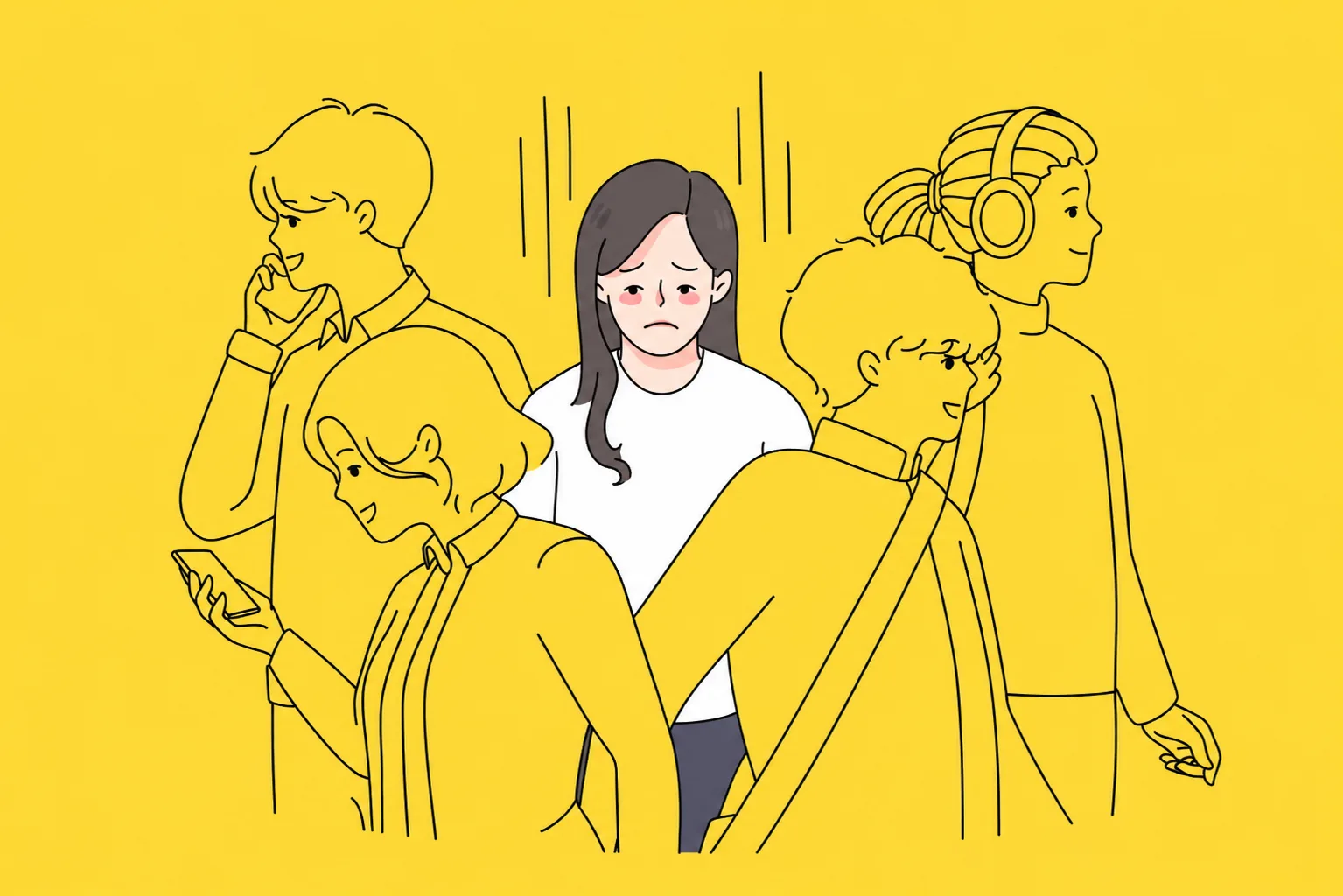
This isn’t party nerves. It’s the next morning, running every sentence back to check what you said wrong. It’s the sum you do on a Wednesday, working out that the night you agreed to is going to cost you more in dread now than it’ll ever pay back in fun later. It’s the group chat reply that lands eight hours late because you needed to draft your reaction first.
Social anxiety is badly named. People hear it and picture stage-fright. The version you actually live with is quieter and more constant, and it’s hard to put a finger on. The NHS calls it a long-term, intense fear of social situations. That’s a different beast from a one-off case of nerves.
The shape of it: anticipation, contact, post-mortem
It tends to run in three phases. First the anticipation: the days, sometimes weeks, of low-grade dread before the thing. Then the contact itself, which you often spend watching yourself from somewhere outside your own body. And afterwards the post-mortem, where you replay it line by line for hours, scanning for any sign you embarrassed yourself.
NIMH lists these features by name. Anticipatory anxiety. Physical symptoms during the interaction. Worry about being judged that keeps going long after. No single bad moment is the issue. It’s the pattern, and the pattern is the diagnosis.
Common symptoms (and why they aren’t character flaws)
NIMH and the NHS both list the same familiar set. Blushing. A thumping heart, dry mouth, shaky hands. A stomach that won’t settle. Your mind going blank the second someone asks you something. The pull to just leave. People who’ve never had it sometimes read all this as you being shifty or cold. Put it in context and it’s plain biology. Your nervous system has clocked a normal Tuesday meeting as a threat and it’s reacting like one.
The mislabelling does real damage. Plenty of people with social anxiety come to believe they’re just bad at people. They’re not. Their body is sounding a much louder alarm than the situation deserves.
Why “just be confident” doesn’t help
Confidence advice skips the mechanism. Telling someone to relax under pressure is about as useful as telling them to digest faster. What does move the dial, according to the NHS and Mind both, is graded exposure paired with skills. You do slightly uncomfortable social things, on repeat, in small steps. Alongside that you learn to handle the physical side: slowing the breath, getting your attention off your own body, the kind of self-talk that isn’t lying to you.
Cognitive behavioural therapy (CBT) is the most-studied approach for that combination. Nobody would call it glamorous. It works anyway.
What to try today
- Lower the bar for what counts as “a social thing”. A two-minute chat with a neighbour counts. A one-line reply in the group chat counts. The progress doesn’t live in the big events. It’s in the tiny repetitions in between.
- Keep the post-mortem short. Catch it when it starts. Name it out loud if you have to. Then push your attention onto something physical and specific: the walk home, whatever you’re cooking, the streetlights coming on. You can’t order a replay loop to stop, but you can starve it.
- Breathe slow before, not during. A long exhale, slower than the inhale, for a couple of minutes before you go in. NHS self-help calls this out by name. It settles the nervous system ahead of the moment, not in the middle of it.
- Stop pre-cancelling. Most plans aren’t dreadful the whole way through. They feel dreadful on Tuesday and fine by Saturday. Don’t let Tuesday make Saturday’s call.
- Tell one person. A friend, a partner, a sibling will do. Saying it once, something as small as “I struggle with this kind of thing,” takes a surprising amount of weight off the hiding.
When to get extra support
When social anxiety starts shaping your calendar, that’s the sign to bring someone else in. Turning down work. Dodging friends. Missing plans you actually wanted to be at. In the UK the NHS Talking Therapies service is free and takes self-referral, so you don’t need a GP appointment to start. CBT for social anxiety has a strong evidence base, and most people notice a difference inside a structured run of sessions.
Asked by readers
Questions readers send us most often, with the pieces that answer each in full.