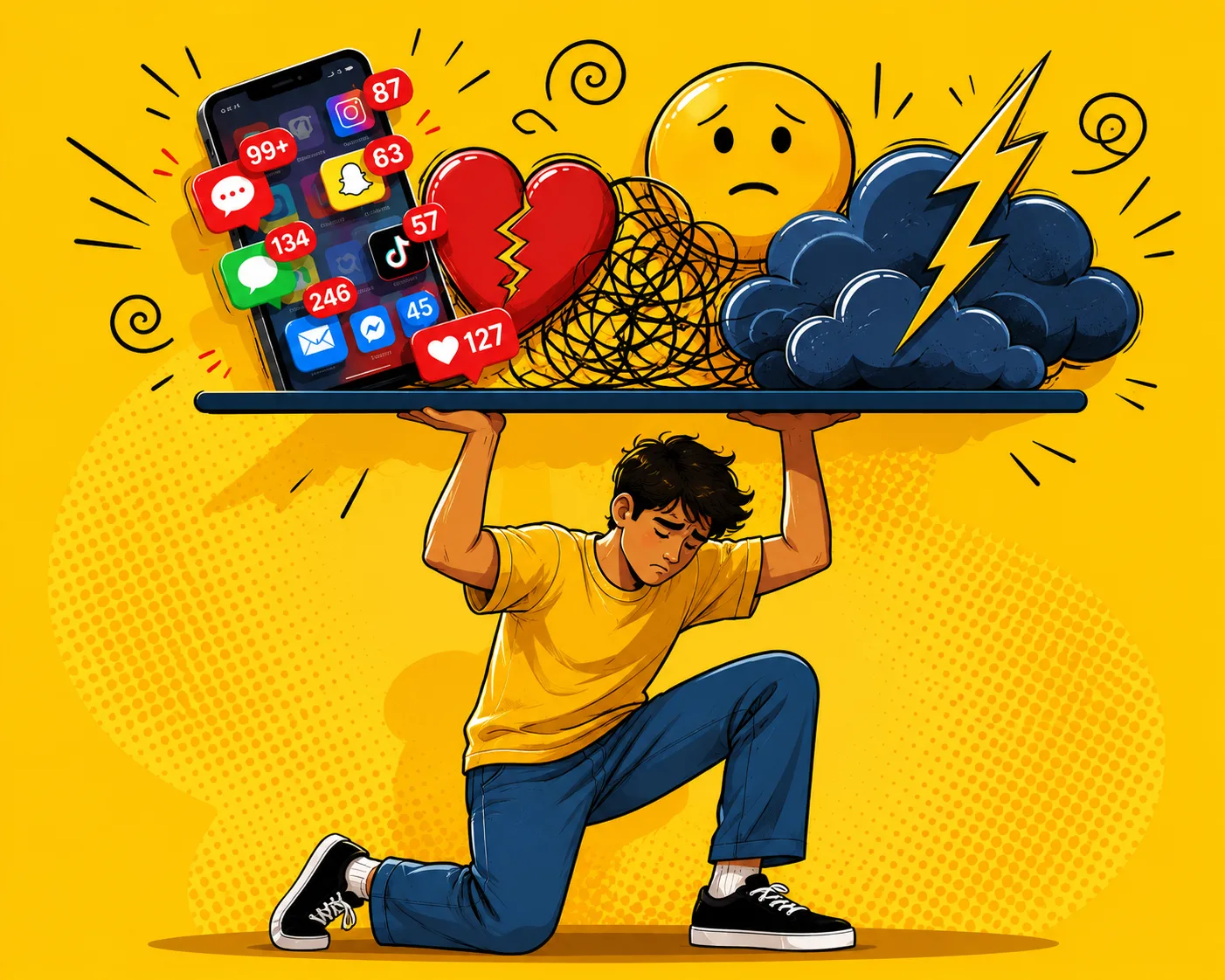
Three apps open. Two tabs auto-playing something. A notification landed thirty seconds ago, someone’s talking, a fan’s going, there’s a bright light overhead and one unread that you keep half-noticing. None of it was hard. You didn’t do anything that should leave a mark. And then it’s evening and you feel like you’ve been run over.
That feeling has a name, though it’s not one people tend to reach for. Cleveland Clinic files it under sensory overload. The American Psychological Association lands on the same ground under chronic stress. Mind UK just calls it overwhelm. Three labels for one of the quietest common conditions of modern life. Too many inputs, all at once, for too long, with barely any recovery wedged in between.
What overstimulated actually means
Overstimulated is the state you hit when the volume of input coming at your nervous system has overtaken its ability to sort it. Lights, sounds, screens, conversations, decisions, feelings. Any of it, through any channel. The system just stops filing. You feel that as irritability, fatigue, a kind of fog, or a sudden need to get out of the room.
This isn’t weakness and it isn’t a personality trait. It’s also not the same thing as introversion, which trips a lot of people up. It’s a biological state, and any nervous system will land there given enough load.
Why you get overstimulated so easily now
A coffee shop, a busy commute, a perfectly normal evening out. If those leave you genuinely wiped now, and they didn’t used to, the explanation usually isn’t that something broke in you. It’s that the rest of your day has already spent most of your input budget before the busy bit even starts.
A normal 2026 morning runs more pings, more decisions, more screens and more half-finished conversations than a 2010 morning ever did. So by 4pm your nervous system is already close to the line. That noisy room you’d have shrugged off at 11am genuinely costs you more later. Same room. Your baseline moved.
What overstimulation feels like, day to day
Sensory overload in adults is one of those things you only really clock once someone hands you the word for it. It’s rarely one dramatic moment. More often it shows up as:
- Snapping at small things you’d normally laugh off.
- Going blank on decisions, even tiny ones.
- A heavy head, like you’ve worn a tight hat all day.
- Wanting to be alone and dreading it at the same time.
- Sleep that somehow doesn’t feel like sleep.
- A low, odd urge to cry, bolt, or just stop.
Cleveland Clinic describes sensory overload as the point where your overstimulated nervous system stops sorting what’s coming in. Too many signals, not enough room to file them. It’s biology, not character. Plenty of people who cope fine most of the time slip into it during a heavy week. And many people with overstimulated ADHD patterns say they live right up against this line most days.
Why it’s so common right now
The APA’s guidance on chronic stress names the obvious culprits. Work demands, money worries, caring for someone. But modern phone life slipped in a quieter input nobody ever learned to budget for. Open feeds. Music in the background. A second screen. A pocket that keeps buzzing. By the time you finally sit in a quiet room, you’ve been taking a small hit every few seconds for fourteen hours.
So most people aren’t overstimulated because something is wrong with them. They’re overstimulated because the default environment now is hostile to a calm nervous system. Nobody warned them it would be.
What to try today
- Cut one input now. Not all of them. One. Close a tab, mute a channel, put your headphones in with nothing playing. That one small drop will show you how loud the room actually was.
- Single-task the next thirty minutes. Cooking, eating, walking, working. Pick one, on its own, no screen. This isn’t about getting more done. It’s about giving your nervous system a chance to catch up.
- Twenty minutes outside without a phone. NHS stress self-help points at short bursts of fresh air and movement specifically. It costs nothing. It works way better than it has any right to.
- Eat something with your hands. An apple, a heel of bread, anything that drags your attention down into one sensation. Cleveland Clinic lists grounding moves like this as a way out of acute sensory overload.
- Get the phone out of bed. For most people this is the big one. A dark, quiet room is doing more for your overstimulation than any breathing app ever will.
Why willpower keeps losing
“Just be on your phone less” falls apart fast, and it’s not a character flaw. The thing is built to keep you on it. Mind UK, in its self-help for overwhelm, says outright to build structural breaks into the day. Don’t lean on spotting the overwhelm as it happens, because that’s exactly the moment you’ve got the least left to act on it.
Structural just means it doesn’t need you to decide. A cap that trips on its own. A friend who can see whether you actually held it. A ten-second block screen sitting between you and the app you keep reopening. Build in a bit of friction now, and future-you doesn’t have to win an argument with present-you at the worst possible time.
When to get extra support
Sometimes it’s more than the phone. If the overstimulation comes with panic, a low mood that won’t shift, or thoughts that scare you, that’s past anything an environment tweak will fix. NHS stress guidance and NHS Talking Therapies are sensible first steps in the UK, and both take self-referral. You don’t have to clear some bar first. Being tired of feeling like this is reason enough.
Asked by readers
Questions readers send us most often, with the pieces that answer each in full.