You sit down to read. Two paragraphs in, your hand has already found the phone you put face-down, opened Instagram, watched something you’ll forget within the hour, and landed back on the book with no memory of what the last line said. So you read it again. Same thing. By the third go the whole day has slid sideways.
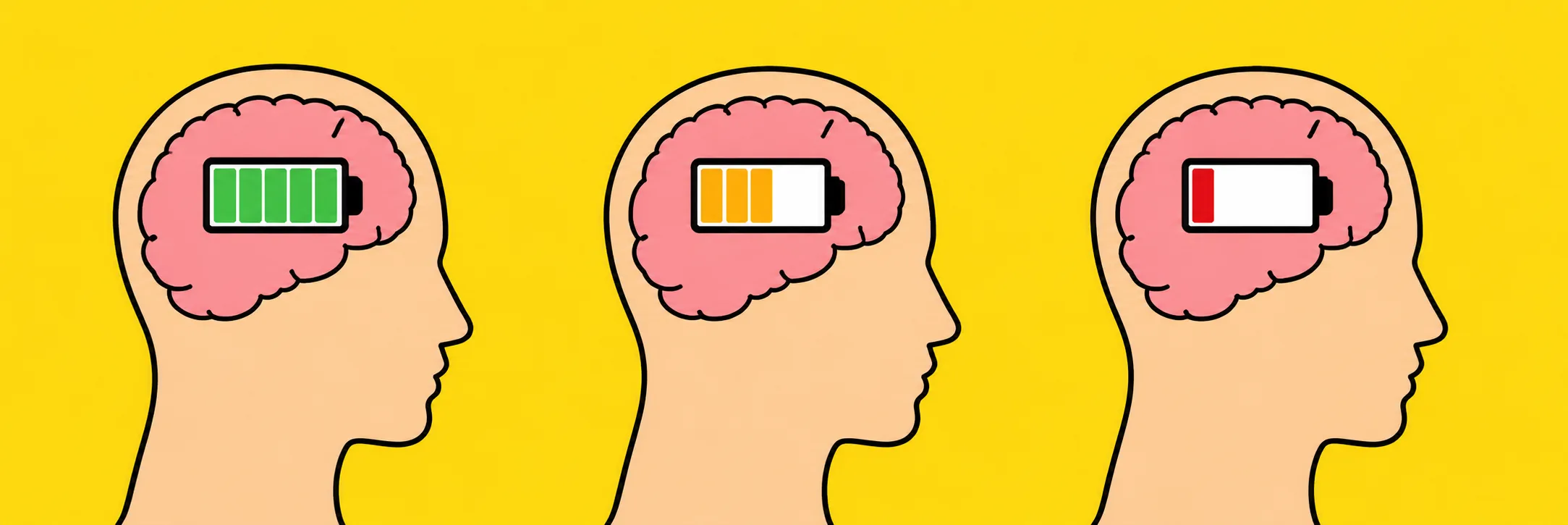
“My attention span is wrecked” is one of the things people say about themselves most often in 2026. It’s rarely literally true. The capacity is mostly still there. What’s changed is how often you train the long version of it, and how loud the room is while you try. The same cluster of symptoms now travels under the slightly half-jokey name brainrot, which we’ve written about separately.
It’s your inputs, not your brain
Researchers have been tracking screen attention in office settings for years. Gloria Mark’s long-running work at UC Irvine is the clearest source here. They measure how long people hold focus on a single screen task, and that number has fallen steadily across the last fifteen years. The average uninterrupted stretch is now well under a minute. Nothing has collapsed inside the brain. It’s the environment around it that’s changed.
(You’ve probably heard that humans now have a shorter attention span than a goldfish. That one’s viral folklore. The original source it gets pinned to doesn’t actually contain the claim. Sustained focus really has gotten harder. The goldfish part is made up.)
And there’s no real attention span test that spits out a single number. Most online quizzes with that label are personality quizzes wearing a costume. A more honest version is also more useful. Can you read a long article in one sitting? Can you sit through a thirty-minute conversation without reaching for the phone? Those are the reps.
Your attention feels short because most of your day is built to interrupt it. Notifications. Tabs. Apps that auto-play. Group chats flickering away in the corner. Any one of them is harmless. Stacked together, they teach your brain to expect a small reward every 20 seconds, and the gap where one doesn’t arrive starts to feel uncomfortable.
What short-form video actually does to focus
The Cleveland Clinic piece on doomscrolling makes a related point. Very short, very high-stimulus content teaches the brain that anything slower is boring by comparison. After an hour of 15-second clips, a 3-minute conversation can feel like it’s dragging. It isn’t. Your baseline has just shifted for a while.
None of this is permanent. Cut the input load and the baseline drifts back within days. Most adults who pull back on short-video sessions for two or three weeks find that reading, conversation, even music, all get easier to stay with.
The boring causes most people skip
A fair amount of “my attention span is bad” has something physical sitting underneath it. The NHS lists trouble concentrating as a symptom of both anxiety and chronic sleep loss, and most adults are quietly carrying a little of each. Throw in caffeine after 2pm and a phone on the bedside table, and you’ve stacked the deck before the day even starts.
So before you decide your focus is structurally damaged, rule a few things out. Five to seven hours of sleep instead of seven to nine. Untreated anxiety. Dehydration. Low-grade depression. A setup where anyone can interrupt you every 90 seconds. A phone sitting in your line of sight.
How to increase attention span, realistically
Almost all advice on how to increase attention span leads with technique. Meditation apps, focus timers, supplement stacks. Some of it helps a bit at the margins. But none of it does much if the environment keeps stripping your reps out from under you. The list below assumes you cut the input load first. Techniques come second.
What to try today
- One uninterrupted block, badly. 25 minutes on one thing, phone in another room. It doesn’t matter what you produce. You’re training the rep, not the output.
- Kill the visual interrupts first. Notifications off for everything bar calls. The APA is blunt about this. The visual ping steals more attention than the sound does.
- Read one long thing a day. A newspaper article, a chapter, a long email. The reps have to be sustained text, not just slower video.
- Stop blaming yourself mid-task. When attention slips, just bring it back. The slipping isn’t a moral failure. The bringing-it-back is the rep.
- Cap the short-video apps. Highest-yield change for most people, by a distance. A daily limit you actually keep moves the dial in days, not months. (This is exactly what Offbit is built to do.)
When to get extra support
If concentration problems have been with you for years, in places no phone reaches, on tasks you genuinely enjoy, that’s the version worth raising with a GP. ADHD in adults is more common than people think, and it often gets misread as “my generation” or “I’m lazy”. If the symptoms only turned up in the last year or two off the back of a phone habit, that’s a different conversation, and a faster fix.
Asked by readers
Questions readers send us most often, with the pieces that answer each in full.