You meant to do one thing. Six hours later you’ve watched a cat riding a Roomba, a guy ranking British supermarkets, half a video about Roman emperors you can’t remember, and a stack of clips you genuinely don’t know how you ended up on. Your head feels weirdly thin. The thing you sat down to do is still sitting there on the list.
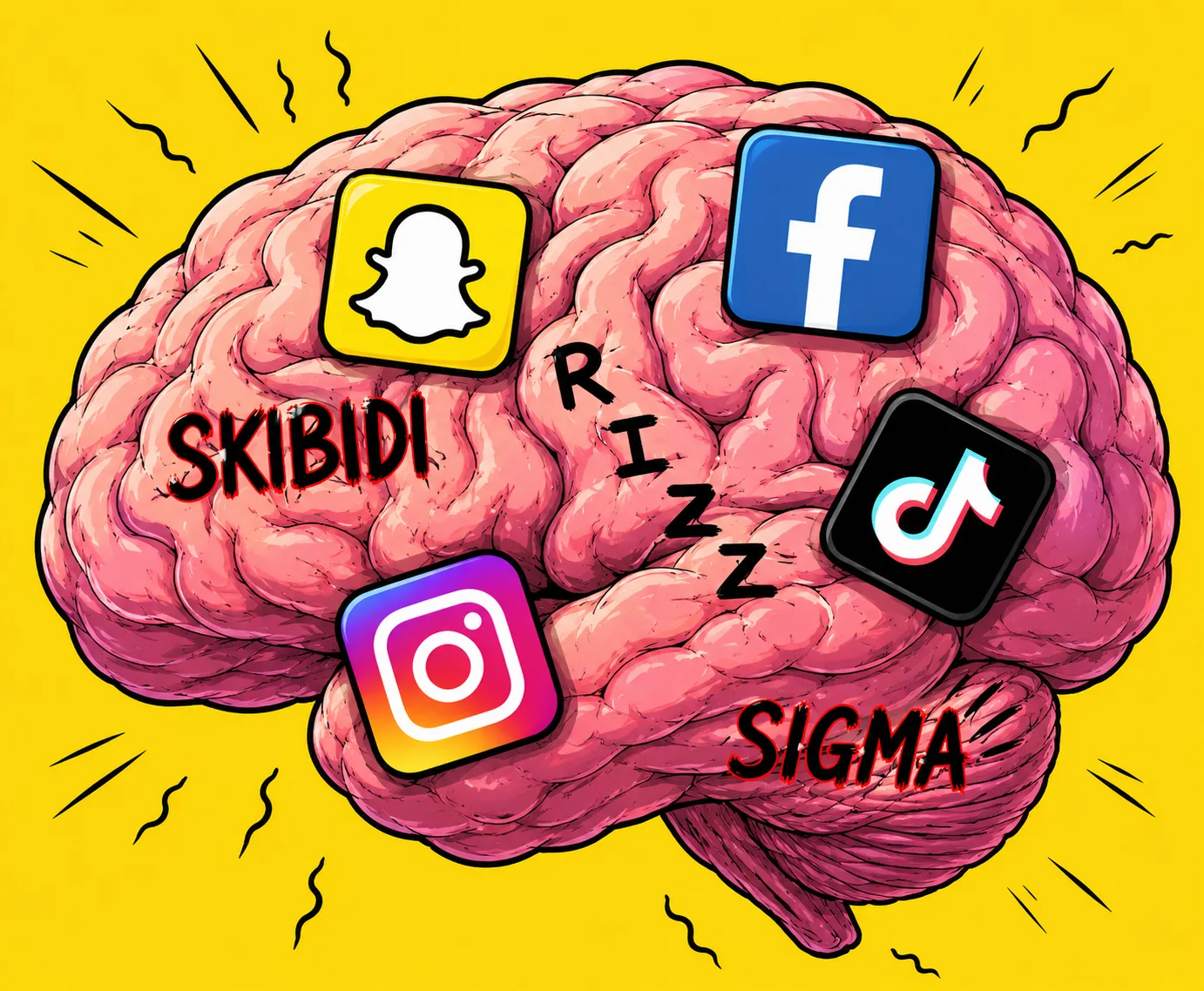
That feeling has a nickname now. Brainrot. Oxford named it word of the year in 2024, and it earned the spot. Millions of people clocked the exact thing the word was pointing at. It’s not a diagnosis. More of a vibe, really. But the vibe sits on top of a real, measurable cluster of behaviours, and for most people that cluster has gotten worse, fast.
Brainrot meaning, decoded
The literal brainrot meaning, short version, is the feeling that something’s been dulled, fragmented, or hollowed out by hours of low-effort content. Short-form video especially. The phrase is half a joke and half a confession, and people almost always aim it at themselves rather than at anyone else.
Where the word came from (and why it stuck)
The internet picked the phrase up from the way people on TikTok and YouTube started talking about themselves after long sessions on short-form video. “My brain is rotted” did double duty as both a confession and a joke. Oxford University Press chose it as 2024’s word of the year on the back of an enormous spike in usage. And the people saying it weren’t older folks tutting about kids today. They were the ones it described.
That self-aware origin matters. Nobody’s wagging a finger here. It’s a description from the inside, written by the people most affected by it.
What people actually mean when they say it
The label is loose. What it points at is fairly specific. Most of the time “brainrot” is shorthand for some mix of:
- A short, fragmented attention span. Easy to start things, hard to stay with them. There’s a whole article on this: why your attention span feels broken.
- A foggy, slightly-removed feeling, the same one most people would also call brain fog from anxiety or stress.
- A pull toward scrolling that never quite relaxes you. The loop covered in how to stop doomscrolling.
- A constant, low-level overstimulated state that doesn’t fully reset, even on quiet days.
- Trouble saying what you mean when somebody asks. A feature of words going missing under pressure.
- A general flatness. Everything’s fine, nothing’s landing. Not depression, exactly. Just a muted baseline.
Notice the shape. There’s no single culprit here. It’s an environment producing a similar-feeling result across several different systems at once: attention, mood, memory, the social load on your nervous system. That’s the modern digital condition the word is reaching for.
Why brainrot isn’t a personality, and isn’t laziness
The most useful reframe is the boring one. The inputs changed; the brain didn’t. Twenty years ago an average adult might have stared at a slow-moving feed for thirty minutes a day. Now the average sits closer to four hours, most of it short-form video built to hand you a small reward every few seconds.
The APA’s guidance on distraction is blunt about it. Every little interruption costs you more focus on the far side than you’d guess. Switching back to a task after a ping carries a real, measurable hit to attention and mood. Multiply that by a few hundred pings a day. You don’t have a damaged brain. You have an environment no brain could focus well in.
Cleveland Clinic puts the short-form-video angle plainly. Very high-stimulus content trains the baseline that anything slower than it is boring. After an hour of clips, a conversation can feel like it’s dragging. It isn’t. Your baseline just shifted for a while.
What “recovery” actually looks like
Cut the short-video sessions for two or three weeks and most adults feel the cluster lift. Not gone. Lighter, though, in a way that’s hard to miss. Sleep comes back. Long reads stop feeling impossible. Conversations feel less like work. None of that is a hack. It’s the underlying capacity coming back online once the environment stops kicking it.
Here’s the unglamorous shortlist of what moves the dial:
- One uninterrupted block of long attention a day. Reading, walking without a phone, a conversation that isn’t about logistics. Doesn’t have to be long. It does have to be uninterrupted.
- A daily cap on the loudest app. Whichever of TikTok, Instagram, Reddit, X, YouTube Shorts, or Snap eats the most of your day. Don’t pick the easy one to give up. Pick the loudest one. Cap the time on it.
- Sleep without a phone in the room. The NHS lists chronic sleep loss as the single most common driver of concentration problems. Phone in another room, alarm clock on the bedside table.
- Greyscale your phone after 8pm. Cleveland Clinic recommends this one specifically. Big effect, costs nothing.
- Other people on the same plan. Solo limits collapse on tired Thursdays. The research on accountability, including the if-then-plans piece we’ve covered separately, keeps landing on the same finding. The limit that holds is the limit a friend can see.
The harder bit: why willpower keeps losing
Brainrot gets treated like a self-discipline problem. The framing usually goes: just put the phone down. That advice fails so reliably, and not because you’re weak. You’re asking the most depleted version of yourself to win a fight against an interface that thousands of people were paid to keep you inside. Willpower at 11pm against infinite scroll is a fight with a known winner.
Structural fixes win instead. Caps that fire without a decision. A friction screen between you and the app. Somebody else who can see whether you held the line. Those beat willpower in almost every behavioural-change study we’ve looked at. It’s the load-bearing finding behind a lot of how we’re building Offbit.
When to take it seriously
Most of brainrot is environmental. Some of it isn’t. If the cluster has stuck around for years, in places phones don’t reach, on tasks you genuinely enjoy, that’s worth taking to a GP. ADHD in adults is more common than people think, and it gets misread as my generation or I’m just lazy all the time. Same goes for a persistent low mood that won’t lift once the inputs do.
In the UK, NHS Talking Therapies takes self-referrals, so you don’t need a GP appointment first, and the threshold for asking is much lower than people assume.
Asked by readers
Questions readers send us most often, with the pieces that answer each in full.
- “Can doomscrolling actually cause brainrot?”How to stop doomscrolling
- “Why is my attention span so bad lately?”Why your attention span feels broken
- “Why do I feel overstimulated all the time?”Overstimulated all the time
- “Can anxiety make me forget words mid-sentence?”Why words vanish when you’re anxious
- “Why does anxiety make my head feel foggy?”Anxiety and brain fog